Elam

Elamite empire map
Elamite empire map

The country of Elam encompassed the southwest of modern Iran. The Elamites designated themselves as Haltamti, from which the Akkadians derived Elamtu. Susa and Anshan were the two major centers of Elamite civilization.

The proto-Elamite period (c. 3400–2700 b.c.e.) witnessed the emergence of writing at Susa. This proto-Elamite script differed sufficiently from Mesopotamian scripts to indicate a different language. Indeed, the Elamite language is unrelated to other known ancient languages.

From the Old Elamite Period (c. 2700–2100 b.c.e.) Mesopotamian texts begin to mention Elam. Because native texts remain sparse, Elamite chronology derives much from Mesopotamian records. Elam’s encounter with the Agade kings illustrates a recurring trait in its history: Elam’s lowlands are readily accessible from the west and periodically came under Mesopotamian control.


By contrast, the Zagros highlands are more isolated by topography and experienced more autonomy. Accordingly, Susa and the Khuzistan plains (in southwest Iran) were the regions that fell most completely under Akkadian dominion.

After Agade’s fall, the Elamite Puzur-Inshushinak claimed the title king of Awan (an Iranian region). His incursion into Mesopotamia was deterred by Ur-Nammu, and Susa fell under Ur III dynasty rule. The Shimashki dynasty (c. 2100–1900 b.c.e.) emerged in the highlands, a result of alliances formed against Ur.

The Elamites eventually regained control of the lowlands, even mov ing west to destroy Ur and capture its last king, Ibbi-Sin. The Elamite king Kindattu managed to occupy Ur but was soon expelled by Ishbi-Erra, founder of the first dynasty of Isin.
Ancient city, Susa
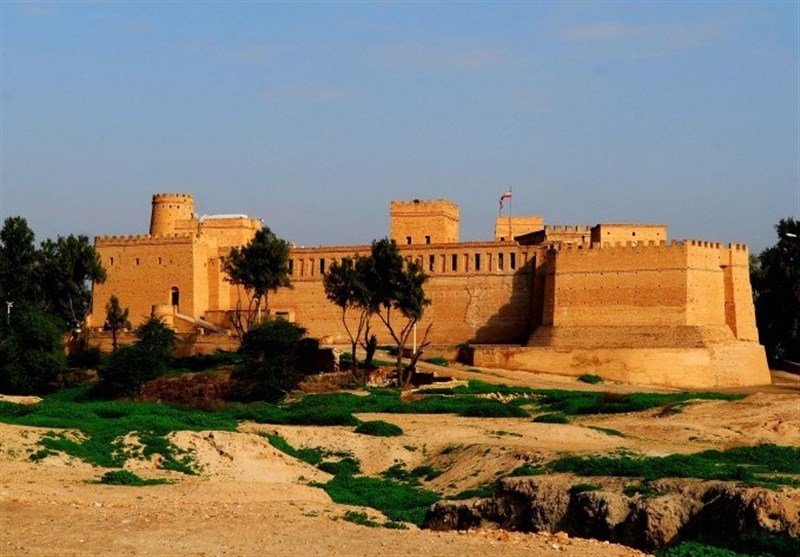
Ancient city, Susa

The Sukkalmah era (c. 1900–1600 b.c.e.) is best attested in the records, when Elam experienced unprecedented prosperity. A triumvirate from the same dynastic family ruled the country: The sukkalmah (grand regent), the sukkal (regent) of Elam and Shimashki in second place, and the sukkal of Susa in third place.

The ascendancy of the city-state of Larsa over Isin was propitious for Elam, and the Elamites even established a dynasty at Larsa. Elam dominated the eastern edge of Mesopotamia, exerting its economic (especially tin trading) and diplomatic presence as far as northern Syria. Hammurabi’s conquests, however, led Elam to decline in the following centuries.

The Middle Elamite Period (c. 1600–1100 b.c.e.) saw a resurgence of Elamite power, marked by the use of the title king of Anshan and Susa. From c. 1400–1200 b.c.e., relations between Elam and Kassite Babylonia were promoted by means of several royal inter-marriages.


However, with the rise of a new Elamite dynasty, Shutruk-Nahhunte put an end to Kassite hegemony by raiding southern Mesopotamia, bringing to Elam such important monuments as Naram-Sin’s Victory Stela and Hammurabi’s Law Code.

His son, Kutir-Nahhunte, terminated the Kassite dynasty by deposing Enlil-nadin-ahi and brought home Marduk’s cult statue from Babylon. Nebuchadnezzar I eventually reclaimed this statue when he sacked Elam around 1100 b.c.e.

During the Neo-Elamite Period (c. 1100–539 b.c.e.) the country faced pressures from two fronts: Medo-Persian encroachment on the highlands and Assyrian aggression toward the lowlands.

The Elamites suffered Assyrian vengeance for being Babylonian allies against the growing Neo-Assyrian Empire. In 647 b.c.e., Ashurbanipal despoiled Susa. Moreover, in 539 b.c.e., Cyrus II conquered Babylonia and extended Achaemenid control over Elam.

Until the Hellenization of the region Elamite culture continued to assert itself through the use of the Elamite language in official documents, the worship of Elamite deities, and the importance of Anshan and Susa in the Persian Empire.

Eleusis

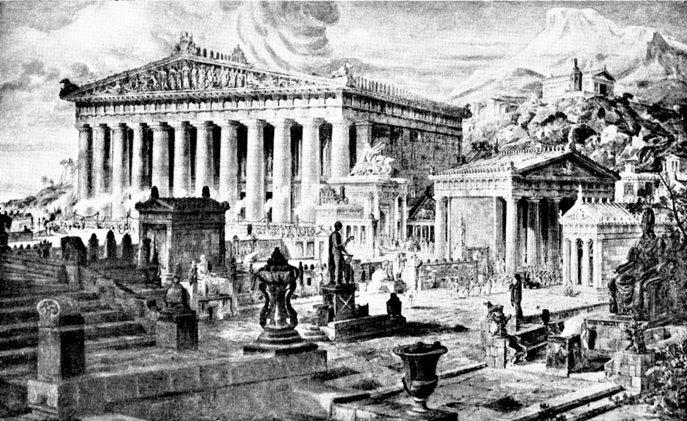
Temple of Demeter in Eleusis

Eleusis was a city in Attica in Greece, located some 12 miles northwest of Athens. From early times Eleusis was associated with the Eleusinian mystery rites of Demeter, a Mother Goddess figure and maternal figure of power, and the development of a cult that existed since the early Greek culture of the Cyclades islands. Festivals like the Eleusinian Mysteries were part of the annual celebration of birth and rebirth in the early Mediterranean.

The rites also included worship of the god of wine and pleasure, Bacchus (or Dionysus). While Athens took over the rites around 600 b.c.e., there is much evidence that the mystery rites had their origin in the dawn of Greek civilization and formed a part with the Mother Goddess cults found throughout both the western and eastern Mediterranean in ancient times.

The festivals, as fertility rites, can only be fully understood when they are viewed as only the first act of a two-act annual drama. What was actually the first act was held in the spring at Agrae, the Lesser Mysteries.


This corresponds with the traditional time of sowing the new crops and the joy of rebirth. The mystery celebration at Eleusis marked not only the harvest, but the hope that life would return again after the winter, as Persephone, Demeter’s daughter, would return from the Underworld, or Hades.

It is possible that in the earliest times the mysteries also included human sacrifice, with the shedding of the blood of the sacrificial victim offered to bring fertility back to the land. Even into classic Grecian times after 600 b.c.e. the celebration of the Eleusinian Mysteries formed a major milestone in Greek religion.

However, something—a taboo or a fear of retaliation from the gods or those who celebrated the mysteries—kept even the most rational minds of the day from relating what happened at the Eleusinian Mysteries, or even about the buildings used in their celebration.

Councils of Ephesus and Chalcedon


The third and fourth ecumenical councils held at Ephesus in 431 c.e. and at Chalcedon in 451 c.e., respectively, discussed and formulated how Christians were to speak of the relationship of Christ’s human and divine natures to one another.

Whereas the earlier ecumenical Council of Nicaea (325) and Council of Constantinople (381) had defined doctrinal perspectives on belief in the Trinity as the conviction that there was one ousia (essence) of God in three hypostases (persons), now Christology was the main concern of the councils.

At the request of Bishop Nestorius of the eastern capital Constantinople, Emperor Theodosius II called together all the major bishops of the Eastern and a few of the Western Roman Empire to meet at Pentecost 431 to resolve questions that had arisen concerning teachings advanced by Nestorius.


Nestorius, who had been trained in the theological tradition of the school of Antioch, resisted calling Mary Theotokos (Mother of God) and preferred to speak of her as Christotokos (mother of Jesus as the one united with the Logos).

Taking advantage of travel delays among the supporters of Nestorius and hostile attitudes among delegates from Asia Minor who resented Nestorius’s claims of authority over them, Cyril took the lead at the council with a group of Egyptian monks. Following irregular proceedings, Cyril had Nestorius condemned and deposed from his position.

When other Eastern bishops, who had arrived late, met separately under Bishop John of Antioch, who was their leader, they criticized Cyril’s anathemas as fraught with Apollinarianism and Arianism and in turn condemned and deposed Cyril and Bishop Memnon of Ephesus. Joined by the Roman delegates, Cyril reconvened the council and condemned and deposed John of Antioch as well as 34 Eastern bishops.

Emperor Theodosius II approved the depositions of Nestorius, Cyril, and Memnon in early August and formally dissolved the council, yet in the confusion following the council Cyril succeeded in returning to his see of Alexandria as victor.

Nestorius, however, withdrew from the capital city to a monastery near Antioch, from where he was expelled first to Petra and then to the Great Oasis in Libya until his death after 451.

Accusations against Nestorius had focused on the claim that he divided Christ and was affirming two Christs and two Sons, a man and God, by considering the union of man and God in Christ as merely an external union.

One of the main opponents of this supposed Nestorian teaching, the influential monk Eutyches of Constantinople, promoted an extreme Monophysite (one [divine] nature) teaching that denied that Christ is homoousios (consubstantial) with humankind.

Having been condemned at a local council under the leadership of Bishop Flavian of Constantinople, Eutyches was rehabilitated by Bishop Dioscorus of Alexandria at the so-called latrocinium (Robber Council) at Ephesus in 449, a meeting remembered both for its irregularities and violence that led to the death of Flavian of Constantinople. Summoned by Emperor Marcian, the Council of Chalcedon met on October 8, 451, to resolve disputes about Monophysitism.

It rehabilitated Flavian of Constantinople and accepted as definitive the Christology formulated in Pope Leo I of Rome’s Letter to Flavian, which stated that in Christ, who is a single prosopon (person) and a single hypostasis, the complete and entire divine and human natures coexist "without mixture, without transformation, without separation, and without division". Thus Christ is homoousios both to the Father with regard to his divinity and to us with regard to his humanity.

Ephrem - Theologian and Composer

Ephrem - Theologian and Composer

Known as the Harp of the Spirit, Ephrem was perhaps the most creative voice of the Syriac culture and church and one of the most influential theologians of early Christianity.

He was born in 306 c.e., just south of the holy region of Syriac monks and spirituality in Mesopotamia. Formed into a mature Christian by the mentor and holy man Jacob, Ephrem became proficient enough to join his teacher in the same school of Nisibis.

Julian the Apostate ignominiously lost his war with the Persian Sassanid Empire, so the Romans were forced to withdraw from Nisibis in 363. The Christians associated with Ephrem also retreated to the eastern frontier city of Edessa. There Ephrem served his people in two primary ways.


First, he threw himself into the distribution of food and alms among the refugees of the retreat. For all of his impact on the church the only office he held was deacon. He had no desire to be a priest, and he avoided the popular call to be a bishop by feigning madness.

His personality aided him in his quest to steer clear of the hierarchy, for he had an irascible personality that only personal sanctity could control. Second, he produced a corpus of hymns, homilies, poems, and commentaries that scholars marvel at today. His genius lay in combining his hymnology with a unique method of interpreting the Bible and spiritual mysteries.

On one hand he accepts the plain sense of scripture (this is called the Antiochene method of interpreting the Bible); but on the other hand he relies on allegory and poetic license when logic and historical circumstances do not offer a relevant application (this is called the Alexandrian method).

His hybrid thinking represents the Syriac Church penchant for dealing with the forces of Gnosticism, and early Judaism. The central event of history and nature is the Christ event: the incarnation of the divine in the life of Jesus (Christ) of Nazareth.

Ephrem finds symbols of this mystery in history and nature, and even the Bible speaks in a typological way about this event. He has no hesitation about borrowing a vocabulary and hymnology that the Syriac church encountered in the Mesopotamian world of the heterodox currents and Jewish influences.

While his method was unique, his own doctrine was orthodox. His hymns and elevated speech show him to be steadfast in opposing Arianism, Marcionism, Manichaeanism, and other Christian Dualisms.

His images stand in support of such ideas as the Last Judgment, purgatory, original sin, free will and its reliance on grace, the primacy of Peter, the intercession of the saints, the real presence of Jesus in the bread of communion, the sacraments, and the Trinity.

All these doctrines are in the crucible of theological development, so Ephrem’s genius is valuable and ahead of his time. He had a special devotion to the mother of Jesus and foreshadowed the concept of her Immaculate Conception.

His compositions are in Syriac, and many were immediately translated into Greek. People so loved his metaphors and analogies that they used them in their own languages and liturgies; thus, some works exist only in their Latin or Armenian forms. A complete inventory of his compositions has yet to be accomplished. Ephrem died in the epidemic of 373, taking care of Edessa’s refugees.

Epicureanism

Epicureanism
Epicureanism

Epicureanism is named after the philosopher Epicurus, who founded a school of teaching in Athens that continued for seven centuries after his death. Epicurus (342–270 b.c.e.) was a citizen of Athens, raised on the island of Samos.

His contribution was aimed at the practical application of philosophy and its role in enabling people to lead a pleasurable and virtuous life. His ideas are completely distinct from the slanderous attacks made on him by later thinkers, who have given to Epicureanism a pejorative sense of gluttony and unbridled hedonism.

Writings of Epicurus that have survived, notably letters to Herodotus and Menoecus, contain only the restatement of the works of others, with one principal exception. This was in the area of atomism.


The basis of atomism is that the phenomena of the universe can be explained by the interactions of the smallest independently existing particles of matter (atoms) that follow observable physical laws in predictable ways.

In other words, there is no fundamental need for the gods to exist for the universe also to exist. Consequently, humanity should be freed from the terror inflicted upon it by anxiety of what new diseases and disasters the gods might next release and in concern that those disasters are the fault of people suffering from them.

To this belief Epicurus added the innovation that some atoms will voluntarily bend from the paths that would otherwise cause them to descend from the skies to the earth.

This voluntary movement, the cause for which was not properly explained, had the effect of preventing people from feeling that they were trapped in a mechanistic universe with no fundamental meaning or purpose.

Epicurus taught in a garden in Athens from approximately 306 b.c.e. until his death. Athens had also witnessed the brilliance of Aristotle within the preceding 20 years and the astonishing conquests of Alexander the Great in Asia Minor and Egypt.

Greek culture was becoming one of the most dynamic forces of the world. Yet, a time of such change and innovation also led to a sense of impermanence and the fear of the unknown.

According to Epicurus, the sensible approach of any adult was to seek the maximization of pleasure and peace, rather than appease or appeal to the supernatural. This is the philosophy of hedonism, which holds the seeking of pleasure to be the ultimate purpose of life.

This does not mean, however, that people should heedlessly chase after any immediate pleasurable sensation without consideration of the future or of any other person. The sensible person should recognize that different forms of pleasure inevitably bring pain.

For example, the thoughtless drinking of wine will lead to the pain of a hangover, while the lusts of a criminal nature will lead to the misery of prosecution. As a result, the properly hedonistic person is also a virtuous person who selects pleasures that do not cause pain to themselves or to others.

However, owing to his atomistic beliefs, Epicurus would have acknowledged that virtue is intrinsically of no value. This made his position rather paradoxical. His belief in the gods, whom he conceived of as living blissful existences while completely ignoring humanity, is also illogical.

If there is no necessity for the gods to exist, as well as no meaningful way to detect their presence, then why would Epicurus claim their existence? It is possible that, bearing in mind the practicality of his teaching, he simply wished to avoid the political danger of denying the existence of the gods.

The Epicurean school continued after the death of its founder and became particularly prominent in Rome. Two of the tutors of Cicero were Epicureans, and Seneca defended the beliefs of Epicurus against the attacks of the religious minded and particularly the Christians.

The conversion of the emperor Constantine the Great to Christianity in 313 c.e. signaled the end of Epicureanism as part of the mainstream of intellectual discourse.

One problem was that Epicureanism showed little ability to innovate or develop. Once it was accepted that Epicurus had identified the proper way to live, there was little to discuss, and people should just go about practicing what he taught.

As Lucretius wrote, he was "... the man in genius who o’er-topped / The human race, extinguishing all others, / As sun, in ether arisen, all the stars". The inability to adapt effectively condemned Epicureanism to continual condemnation by religious believers who characterized it as little more than egotistic selfishness.

Humanists who tried to support Epicureanism were condemned as libertines. The poem "De Rerum Natura" ("On the Nature of the Universe") by the Roman philosopher and Stoic Lucretius explains Epicureanism in its fullest form.

Era of Division (China)

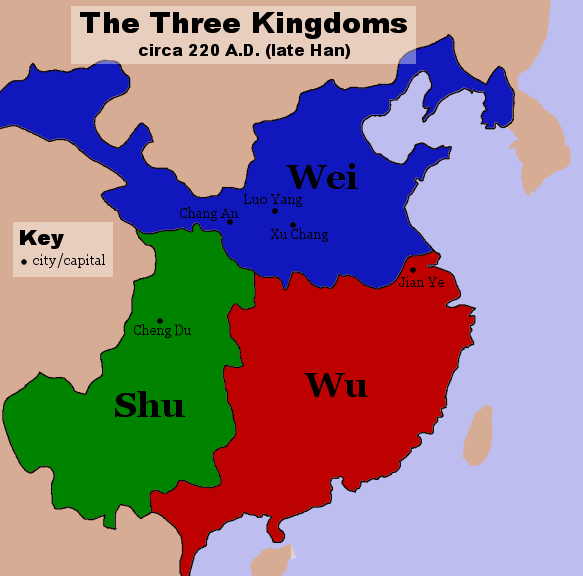
Era of division map
Era of division map

The first part of the Era of Division that followed the Han dynasty, between 220 and 280 c.e., is called the Three Kingdoms period. It ended in 280, when the Jin (Ch’in) dynasty, led by the Sima (Ssu-ma) family, reunified China.

But the unity was fragile because the founding ruler divided his realm among his 25 sons on his death, giving each a principality under the nominal control of his principal heir.

The princes and other noblemen soon fell upon one another in civil war, and one of them called on the Xiongnu (Hsiung-nu) northern nomads for help. The Xiongnu chief claimed descent from a Han princess, called himself Liu Yuan, and named the Shanxi (Shansi) region he controlled the Han but later changed its name to Zhao (Chao).


Liu Yuan’s forces sacked both ancient capitals, Chang’an (Ch’ang-an) and Luoyang (Loyang), burning the imperial library of the Han dynasty. The Jin court fled south in 316 and set up a new capital in Nanjing (Nanking), which had been capital of the Wu state during the Three Kingdoms period in China.

The year 316 marked the division of China into two halves that lasted until 589. It was called the era of the Northern and Southern dynasties. Chinese rule was superseded in northern China, which became the battleground of different nomadic groups, the Xiongnu, the Xianbei (Hsien-pei), both Turkic in ethnicity, and the Toba (T’o-pa), who were ethnically Tungustic.

In 387 the Xiongnu attempted to conquer the south, but the watery southern terrain was unsuited to their cavalry, and they were decisively repulsed at the Battle of Feishui (Fei Shui) in modern Anhui (Anhwei) Province.

chinese army in era of division

As a result, the situation between the north and south was stalemated. In 386 a new nomadic group from the north-east defeated both the Xiongnu and Xianbei and established the Northern Wei dynasty in northern China that lasted until 557.

The Tungustic rulers of the Northern Wei dynasty first established their capital city at Datong (Tatung) in modern Shanxi Province, a logical place for a nomadic dynasty because it was located near the Great Wall of China.

Fierce warriors (the Toba population was estimated to be no more than 200,000 people), with no written language and a primitive culture, the Toba soon embraced Buddhism, ordering the excavation of extensive cave temples outside Datong at a site called Yungang (Yunkang). They also embraced Chinese culture with enthusiasm.


In 494 the Northern Wei moved the capital to Luoyang to be near the heartland of Chinese culture and ordered the excavation of another series of caves devoted to Buddhist worship nearby at a site called Longmen (Lungmen).

At the same time the government also forbade the Toba people to wear their traditional clothing or use their tribal titles, ordering them to adopt Chinese surnames and speak Chinese instead.

Some Toba people revolted against sinicization, which split the dynasty into two short-lived rival kingdoms called the Eastern Wei and Western Wei, which were followed by the Northern Qi (Ch’i) and Northern Zhou (Chou).

None of the dynasties that followed the Northern Wei ruled all of North China. The era of division ended in 581 c.e. when a Northern Zhou general, Yang Jian (Yang Chien), usurped the throne and went on to unify the north and south under his new dynasty, the Sui.

Meanwhile in southern China, from the Yangtze River valley south, five dynasties followed one another. They were the Jin (Chin), 317–419; Liu Song (Sung), 420–477; Qi (Ch’i), 479–501; Liang, 502–556; and Chen (Ch’en), 557–587. Nanjing was capital to all five.

There was large-scale immigration of northerners to southern China during the Era of Division. The refugees who fled the nomads brought the refinements and advanced culture of the north to southern China and absorbed the aboriginal populations into mainstream Chinese culture.

Thus, whereas southern China was a frontier region during the Han and a place of exile for officials and convicts, by the end of the sixth century c.e. it had become developed and economically advanced.

Culturally, the most remarkable change during the Era of Division was the phenomenal growth of Buddhism in China, an Indian religion that first entered China during the beginning of the Eastern Han dynasty (25–220 c.e.), brought by missionaries and traders along the Silk Road.

While making inroads, Buddhism had remained an exotic religion of foreigners and some Chinese during the Han dynasty. Confucianism as a state ideology collapsed with the fall of the Han dynasty. The primitive religions of North China’s nomads had little to offer confronted with the appealing theology of Buddhism and its stately rituals and ceremonies.

Thus, a nomadic ruler stated in 335: "We are born out of the marches and though We are unworthy, We have complied with our appointed destiny and govern the Chinese as their prince ... Buddha being a barbarian god is the very one We should worship". The nomads' Chinese subjects also embraced Buddhism for consolation in times of trouble and for its attractive and universalistic teachings.

Adherence to Buddhism made the nomadic rulers less cruel to their Chinese subjects and built bridges between the rulers and ruled. Buddhism also became dominant in southern China because its teachings assuaged the pain of exile for northern refugees and because of its theology, which answered questions that Confucianism and other Chinese schools of thought failed to address.

Similarly the chaos and collapse of Confucianism as state ideology during the Era of Division revived interest in Daoism (Taoism), allowing some disillusioned intellectuals to take refuge in an escapist philosophy.

Seeking longevity and immortality, some learned Daoists delved to learn about the properties of elements and plants and produced a vast pharmacopoeia. Popular Daoism was enriched as a result of borrowing ceremonies and monastic institutions from Buddhism.

The Era of Division was politically a dismally chaotic period in Chinese history. However, intellectually it was not a dark age, principally due to the rapid growth of Buddhism, which contributed enormously to Chinese civilization. The nomads became rapidly sinicized, and intermarriages between northern urban upper-class Chinese and nomads leveled their differences.

Book of Esther

Queen Esther
Queen Esther

The book of Esther tells the story of the Persian queen Esther and her uncle Mordechai, who foil the plot of Haman, a wicked Persian courtier, to exterminate the Jews. Haman is hanged on the very scaffold where he intended to hang Mordechai, and Mordechai replaces him as an adviser of the Persian king.

The book, written originally in biblical Hebrew, survives in various forms. The differences among these forms determine the many afterlives that the book has enjoyed. The date of the original form of the book is uncertain.

The Jewish book of Esther is best known from the liturgy. The scroll (Hebrew: megillah) of Esther is read on the feast of Purim, the origins of which are commemorated in the book.


Esther is grouped in the Jewish Bible with other festival scrolls, the Five Megilloth. Purim is an early spring feast associated with revelry and even drinking. Its ultimate origins are Mesopotamian or perhaps Iranian.

Esther tells the story of the Jewish form of the feast: Jews commemorate the success of Esther and Mordechai in halting Haman’s wicked plans for Jewish genocide, an echo of the genocide planned in Exodus. Esther has also served as a talisman for the historically large community of Iranian Jews, who call themselves "Esther's children".

The Protestant book of Esther is identical to the Jewish version except in being categorized as a historical book, put in sequence with Joshua, Judges, and others as describing the history of God's chosen people. Much Protestant exegesis and scholarship has focused on Esther as a historical text.

To be sure, Jews through the ages have thought of Esther as a genuine historical figure but with much less urgency than most Christian students of scripture. Protestant interpreters were also influenced by the identification of the Persian king Ahasuerus as one of the historical rulers called Artaxerxes.

The Catholic–Orthodox book of Esther is the result of another facet of the early Greek translation. The Hebrew text of Esther, and thus the Jewish and Protestant versions, do not mention the name of God at all, although the story as it unfolds is clearly overshadowed by divine providence.

The Greek translators remedied this supposed deficiency by inserting two long prayers (one spoken by Mordechai, the other by Esther), along with a variety of other elements.

These passages, called the "Additions to Esther", are canonical parts of scripture for Catholics and Orthodox; they are among the Apocrypha of Protestant Bible translations.

The only portions of Esther that contributed to Catholic and Orthodox liturgies are the two prayers. Traditional Catholic-Orthodox interpretation has also taken Esther as a historical book.

The literary character of the book has been emphasized by modern biblical scholarship: The book is a story explaining how Jews in a non-Jewish world can be successful and protect themselves.

It has some historical basis in that Jews lived all over the Persian Empire, but there is no evidence for a king named Ahasuerus, no Jew ever rose to the status Mordechai attains of controlling the empire, and no Jew ever became the queen of Persia.